What it’s really like being backstage at Eurovision

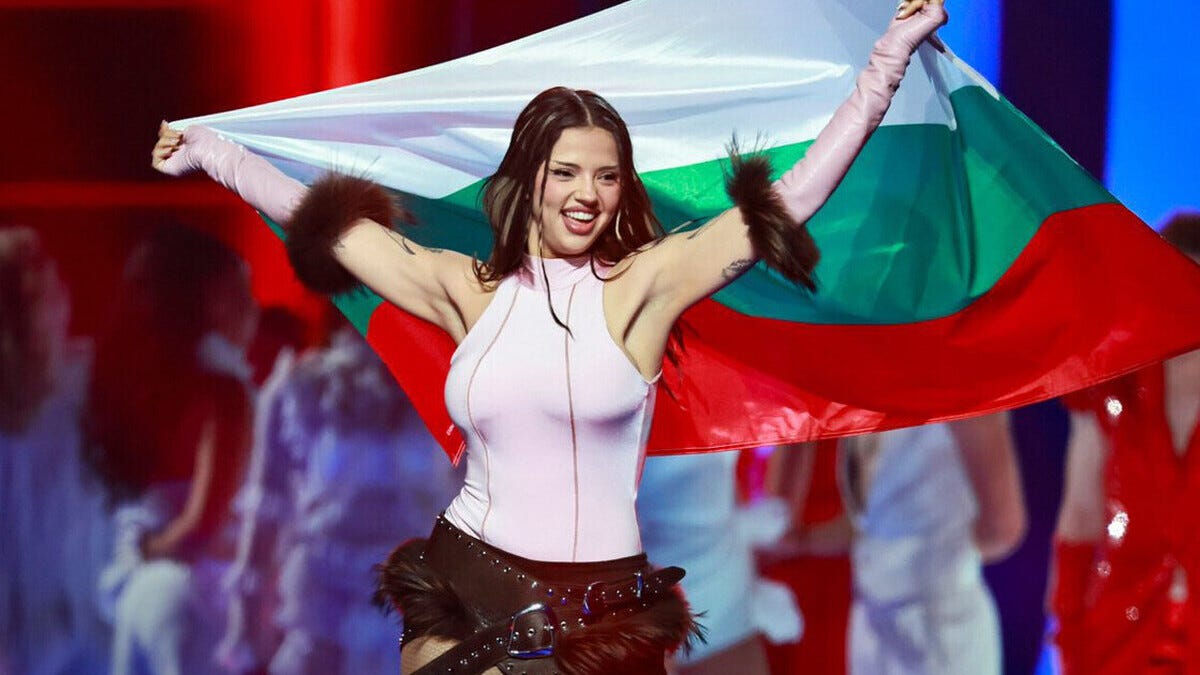
This year marked seven years for me at Eurovision, this time based in Vienna, Austria.
For those of you who don’t know, the Eurovision Song Contest is an annual international music competition organised by the European Broadcasting Union (EBU). Each participating country submits an original song that is performed live on television, after which viewers and music industry juries vote to determine the winner. Whoever wins hosts the contest the following year - which is how we ended up in Vienna this year, after the incredible JJ stormed it last year with “Wasted Love.”
My very talented client Rylan commentates the semi-final coverage for BBC One and then the final for BBC Radio 2. He’s been doing this for eight years now and is, hands down, the biggest Eurovision fan in the world. I know there will be people who want to debate this with me , but if you saw him host the Eurovision quiz during semi-finals week, it’s hard to disagree. The man is a walking, talking Eurovision encyclopedia, and watching him in his element each May has become one of my favourite parts of the job.
It also marks that time in the year where I get to spend quality time with my client, in a world that he loves.
Here’s the embarrassing confession though: before my first Eurovision, I wasn’t a fan. I’d probably even have stuck my nose up at the whole concept. All I really knew was that the UK had once tried to put Katie Price forward (she didn’t make the final cut) - and that fact alone had me convinced the whole thing was a bit of a joke. Then 2019 happened. I arrived in Tel Aviv for my first contest, and my mind was completely flipped. Seven years later, I’m one of the converts trying to recruit everyone else.
What’s it like when you arrive?
The thing nobody really prepares you for is just how all-encompassing the host city becomes. When you arrive, it’s like stepping into a parallel universe where the only currency is Eurovision. Billboards in the contest branding light up the streets as you make your way to your hotel , which, by the way, is chosen for you by the EBU. Each country’s delegation is allocated a specific hotel, and you’re often sharing with others. This year, the UK shared with Denmark, Cyprus and a handful of other delegations, which makes for some genuinely surreal elevator small-talk. One evening, I was sat in the hotel sauna with a guy who was here from Czechia who was dancing dressed as a mirror. Each morning, you get down to breakfast and every country is in their clan, chatting the day ahead.
Whats the bubble that everyone talks about?
Normally, after setting into your hotel, Rylan gets excited to take you to the Eurovision bubble - the venue, the press centre, the rehearsal rooms , and it’s like stepping straight into the Hunger Games of music. You know that scene in the films when the tributes arrive in the Capitol and everyone is futuristic, somewhere between cool and absurd? That is exactly what it feels like. One second you’re walking past a girl group running their dance routine in a corridor; the next, a man covered head-to-toe in silver paint is strutting through the canteen as if it’s the most normal thing in the world.
After a few days, it sort of is. The energy is electric. Everyone there is in love with the competition and gearing up for what is, genuinely, the biggest singing contest in the world. You can feel the nerves, but also the excitement. Every act has travelled with their team from their home country, and although the camaraderie between them is lovely, there’s a real fight in the air too. They want to win. They also want to have fun. Both things, at the same time, all week.
And what about the music?
Another thing I clocked quickly is that the music is so much better than the cliché suggests. I had no idea. Despite what you might think, the songs are very good and the artists are very talented. The mix is so wide that you can have a euphoric EDM banger, a proper rock ballad and a frothy Euro-summer pop song all in the same evening. I never thought I’d become obsessed with Eurovision music, but Loreen’s “Euphoria” still stands up as one of the great pop songs of the 2010s, and this year’s Australian entry from the incredible Delta Goodrem is a proper goosebumps ballad - the kind of song that makes the whole arena go quiet. And let’s not forget , Eurovision gave us ABBA.
Fun fact: the UK awarded them zero points in 1974. How did we get that so wrong?
What do you do during the day?
People always ask me what we actually do all day, and the honest answer is that it’s a grind disguised as a party. Every day can be different. Mornings can start early, depending on what press you have planned. Coffee in the hotel lobby (which inevitably doubles as a delegation meeting room, because everyone is staying together and there’s nowhere else to go). Because we’re with the commentator, our day can be a lot more spaced out , whilst the BBC team who work with the act are working non stop - Huge shout out to Katie, Adam, Michael , Lucy and Andrew who are some of the hardest working people in the industry.
If we have some time, Rylan and I usually grab some lunch in the city and catch up about work and strategy - if not, were in the arena rehearsing our lines and watching the acts do thier things.
The jury show on the Friday night is, in many ways, the “real” final, because that’s when half the result is locked in there and then; you’re watching just as nervously as you will on Saturday. By the time the show ends, it’s gone 11pm. You check in with home, debrief with yoru client, and only then , finally , does the night start. Sleep, optimistically, around 2am. Then you do it all again the next day.
Where does Rylan do his thing?
One of the parts that fascinates me most is the commentary boxes. They line the very top of the arena, looking down on the stage like a row of glowing little windows. Each country sends their own commentators - for us that’s Rylan, Angela Scanlon, Sara Cox and Graham Norton , and they sit in tiny perspex booths connected to their home broadcasters, watching the show on a screen in front of them while talking to millions of people back home. From the arena floor, you can sometimes look up and see all the boxes lit up around the rim, every one a country, every one a story, all of them feeding into the same shared show in the middle. It sounds silly but there’s something quietly moving about it.
And my favourite part - Euroclub
And then, of course, there’s Euroclub. Every host city takes over a venue for the week and plays nothing but Eurovision songs all night, every night. I’ll be honest - I’m too old for it now. But during my first contest in Tel Aviv, we’d finish the show, head straight to Euroclub, and let our hair down with the other delegations until the small hours. It is such a relaxed, joyful environment, and somehow you all become each other’s people for the week. You dance with the Norwegians, hug the Greeks, do shots with the Finns, and by the end of it nobody really cares who is from where. That shared experience is the bit nobody tells you about - and it’s the bit, more than the lights or the songs or the green room, that turned me into a Eurovision lifer.
Vienna was my seventh contest, and somehow it still managed to surprise me. Eurovision is sequins and silver paint and key-changes, yes , but it’s also long days, mindblowing arenas, jury-show nerves, in-jokes with delegations you only see once a year, and the strange family you accumulate without ever quite meaning to. If 19-year-old me, sneering at the very idea of it, could see me now, he’d be horrified. And I wouldn’t change a single thing.